
Nothing slows a case like a torn drape or a foggy view. The surgeon stops, the team scrambles, and sometimes the whole drape has to be replaced.
Most of these problems have simple causes. This guide explains them and how to fix each one.
Key takeaways
- Most tears come from the wrong drape size or too little slack at the joints.
- Fogging is condensation: warm, moist air meeting a cooler lens.
- Glare comes from light bouncing off the drape’s lens window.
- A well-fitted drape with a good lens prevents most problems.
Quick Troubleshooting Table
| Problem | Likely cause | Fix |
|---|---|---|
| Drape tears when the arm moves | Drape too short or pulled too tight | Use the right size for your model and leave slack at joints |
| Tear near the eyepieces | Ocular covers stretched over the wrong eyepieces | Check the number of ocular covers matches your scope |
| Lens window fogs up | Warm, moist air on a cooler lens | Let the scope warm up, keep breath away from the lens area |
| Glare or bright spots in the view | Light reflecting off the lens window | Use a non-glare lens and make sure it is seated flat |
| Blurry or smeared view | Lens window splashed or touched | Replace the lens (if the drape allows) or the drape |
| Drape slips off the lens | Lens ring not fully seated | Re-seat the lens ring before unrolling the drape |
Why Microscope Drapes Tear
1. Wrong Drape for the Microscope
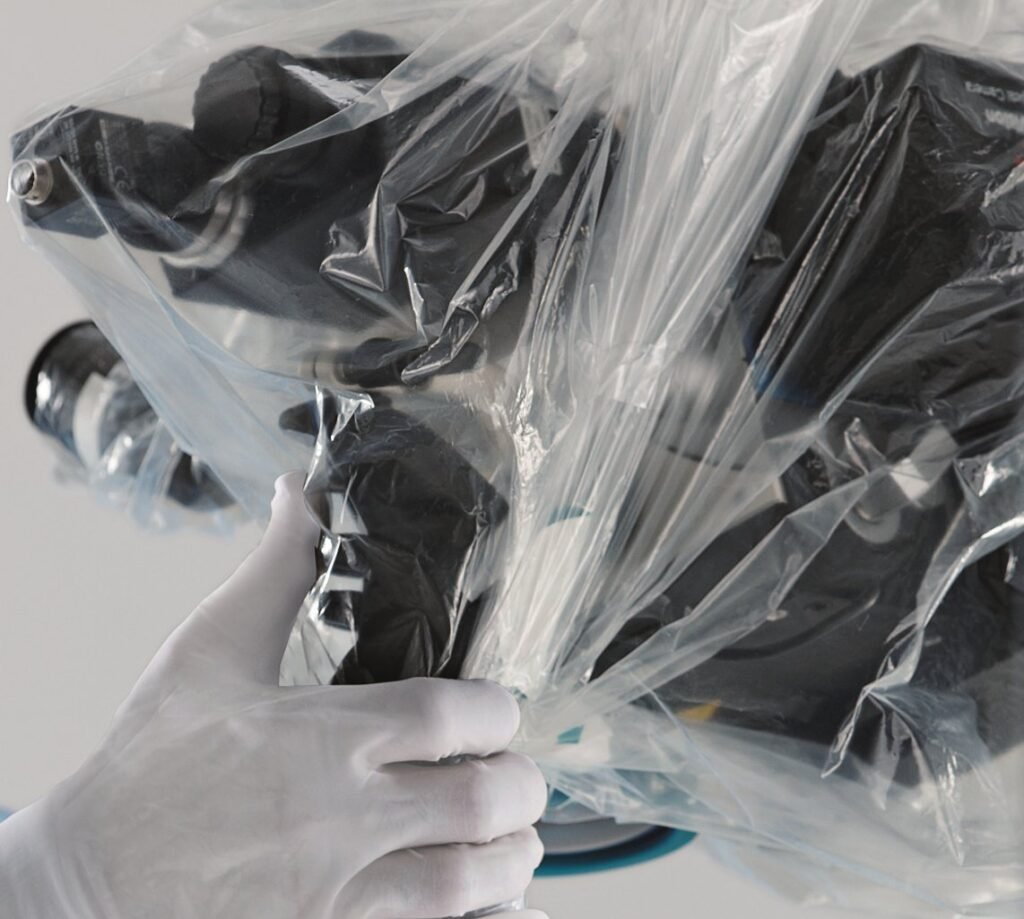
A drape made for a smaller microscope will be stretched tight on a larger one. When the arm moves, the plastic tears.
Fix: Check the drape against your exact model. Our compatibility chart lists the right ASP drape for Leica, Zeiss and Mitaka microscopes.
2. Not Enough Slack at the Joints
The arm bends and turns during surgery. If the drape is gathered too tightly, the joints pull on it.
Fix: After draping, move the microscope through its full range of motion before the case starts.
3. Rough Handling
Rings, sharp instrument tips and tight taping can puncture the plastic.
Fix: Handle the drape by the cuffs and use the built-in ties instead of extra tape.
Safety note: If a drape tears or the sterile side touches anything non-sterile, replace it. Do not patch it with tape.
Why the Lens Fogs Up
Fog is just condensation. It happens when warm, moist air hits a cooler surface, like a lens window. Eyepieces and glasses fog for the same reason, especially when surgeons wear masks and face shields.
Fixes:
- Turn the microscope light on a few minutes before the case so the optics warm up.
- Make sure masks fit well over the nose so breath goes down, not up.
- Keep the room’s temperature and humidity within your facility’s normal range.
- Avoid wiping the lens with a wet gauze, which can leave streaks.
Why You See Glare
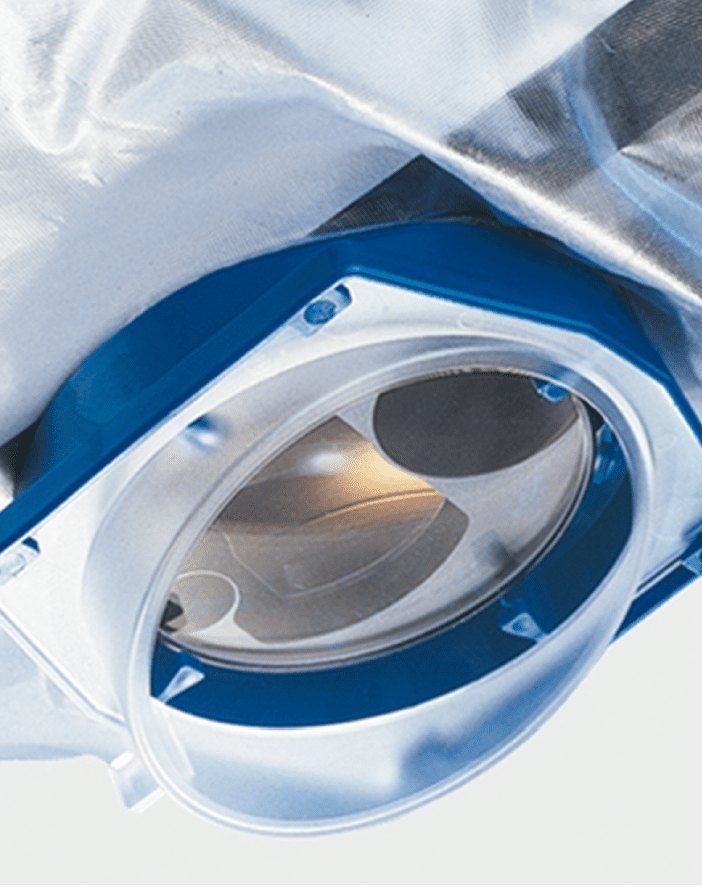
Many surgical microscopes shine light down through the objective lens. Some of that light bounces off the drape’s lens window and back up into the eyepieces. The result is glare or bright spots.
Some teams react by removing the lens cover mid-case. That exposes the microscope’s own lens to blood and fluids, and can put the sterile field at risk.
Better fixes:
- Use a drape with a non-glare glass lens, like ASP’s Leica ClearLens.
- Make sure the lens window is seated flat and centered.
- For long or messy cases, use a drape with rapid lens replacement, like the Zeiss LensGuard. Your team can swap a soiled lens without replacing the whole drape.
When It’s Time to Switch Drapes
If your team sees the same problem week after week, the drape may be the issue. Signs it is time to switch:
- Frequent tears on the same microscope
- Surgeons complaining about glare
- Staff removing lens covers mid-case
- Running out of stock and using the wrong size
Frequently Asked Questions
Why does my microscope drape keep tearing?
Usually because it is the wrong size for the microscope or is gathered too tightly at the joints.
How do I stop the microscope lens from fogging?
Warm up the optics before the case, keep breath directed away from the lens and maintain normal OR humidity.
Can I remove the drape lens to reduce glare?
It is not recommended. It exposes the microscope’s lens to fluids and can risk the sterile field. Use a non-glare lens drape instead.
What is rapid lens replacement?
A drape design that lets you swap a dirty lens window mid-case without changing the whole drape.
Related Guides
About American Surgical Products
American Surgical Products has supplied hospitals and surgery centers across the United States since 2010, with no sales reps and no markups. It is the online store of DB Surgical, a Florida medical device distributor founded in 1997 whose Leica-certified technicians service surgical microscopes across the Southeast. Questions? Call 1 (866) 573-7774 or email service@americansurgicalproducts.com. Se habla español.
This article is general information for clinical and purchasing teams. It is not medical advice. Always follow the manufacturer’s instructions for use and your facility’s policies.